St Stephen’s College(St Stephen's Chapel of St Stephen's College)
St Stephen's Chapel of St Stephen's College
Inaugurated in 1950, St Stephen’s Chapel of St Stephen’s College was built on the highest point of the campus to honour those killed in the internment camp during the Japanese Occupation (1941—1945) and other victims in the World War II.
The chapel was built to a cruciform plan, with its plain-rendered walls raised off a granite plinth. The architectural details show how the school remembered the victims of World War II. The stained glass on the arched door features emaciated prisoners of war and children praying in the centre. Above them are a pair of doves in flight. This picture reflects the harsh days in the internment camp and shows that the victims overcame the hardships of the Japanese Occupation with great virtues of faith, hope and love. Two textual records originally engraved on the cell walls by the detainees documenting the hard times in Stanley Internment Camp were reproduced on the stained glass. The first is a calendar drawn by D.W. Waterton. Using one oblique stroke to represent each day, he recorded his time in Stanley Internment Camp, from the start of his detention on 4 July 1943 to the day of his execution. The second record shows the name and date of the execution of some of the prisoners of war. According to the college, the original textual records were exhibited in Imperial War Museum in Britain.They were reproduced on the stained glass because of their historical significance.
A plaque in the chapel commemorates some of the soldiers who gave their lives during World War II. Among them were victims of the sinking of Lisbon Maru, a ship carrying prisoners of war from Hong Kong to Japan in 1942.
Today, students and staff members of the college pray and attend services in the chapel. Memorial services are held regularly to honour the teachers who sacrificed their lives in the Japanese Occupation and were buried in Stanley Military Cemetery near the college. These include Professor Tam Cheung-huen, head of Chinese Studies; Mr John Gaunt, mathematics teacher; and Mrs Kathleen Louisa Martin, wife of the warden.
In 2008, the college set up a heritage trail linking its historic buildings, such as the School House and chapel. The trail commemorates victims of World War II, while illustrating the school’s history to the public and bearing testimony to the close connection between St Stephen’s College and the history of Hong Kong.
St Stephen’s College Heritage Trail Docent Tour is open to public on Saturdays and Sundays, subject to the school activities. Please visit the official website for details.
Interested parties are welcome to register for the tour via the school application form:https://www.ssc.edu.hk/links/ssctrail/eng/docent.html
For details, please visit the official website of St Stephen’sCollege: https://www.ssc.edu.hk/
Enquiry Hotline: (852) 2813 0360
22 Tung Tau Wan Road, Stanley, Hong Kong.
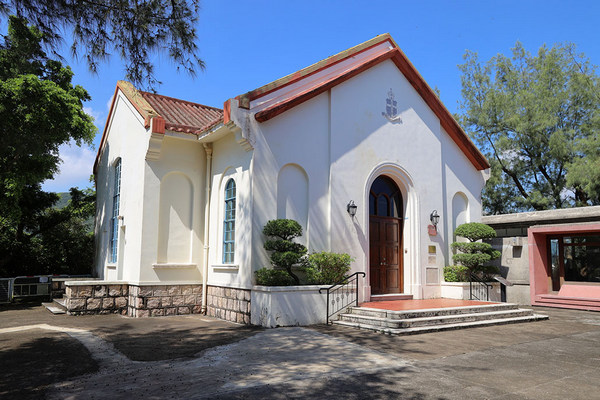
St Stephen’s Chapel of St Stephen’s College, 2023.©Antiquities and Monuments Office
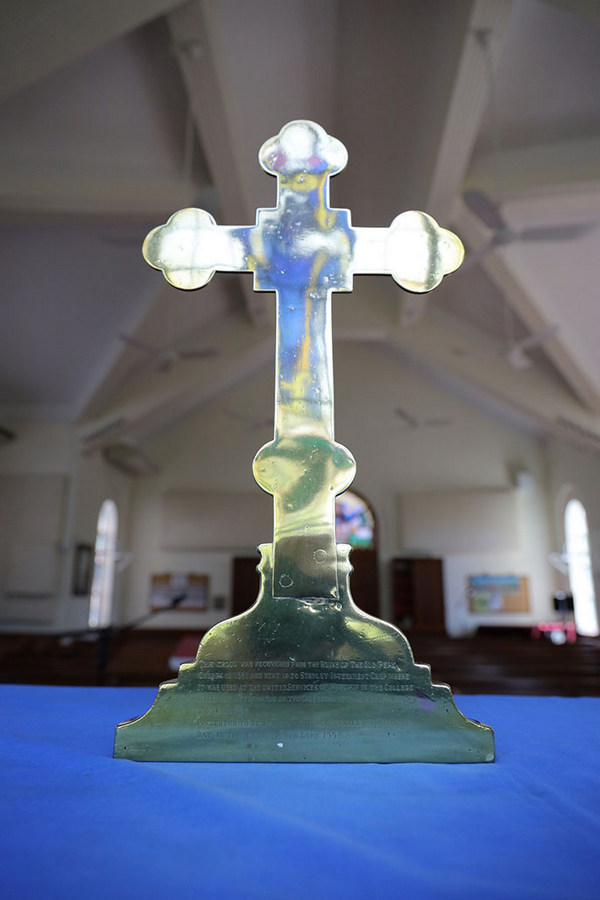
in the joint Sunday service of Stanley Internment Camp during the Japanese Occupation. It is preserved in good condition and remains in use today, 2024.©Antiquities and Monuments Office
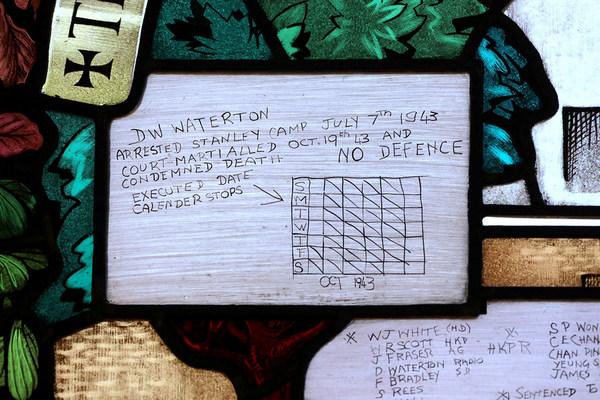
Two textual records by the detainees are reproduced on the stained glass. Above is a calendar drawn by D. W. Waterton to mark his final days in Stanley Internment Camp, 2024.©Antiquities and Monuments Office
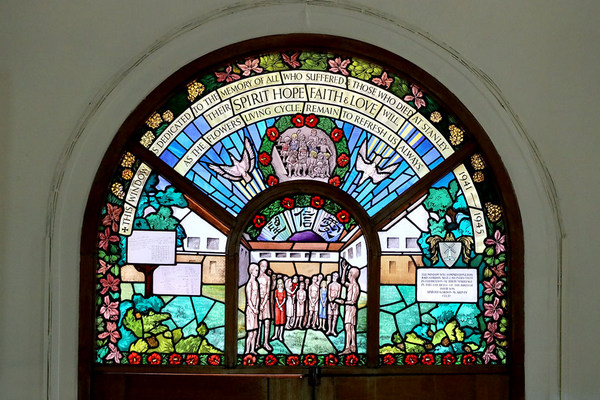
The stained glass of St Stephen’s Chapel reflects the difficult times during the Japanese Occupation, 2024.©Antiquities and Monuments Office
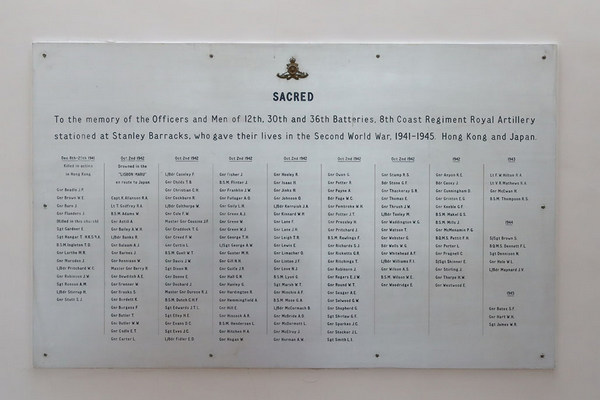
A plaque inside St Stephen’s Chapel honours soldiers who gave their lives during World War II and the victims of the sinking of the Japanese prisoner-of-war ship Lisbon Maru, 2024.©Antiquities and Monuments Office
-
扫一扫在手机打开当前页